






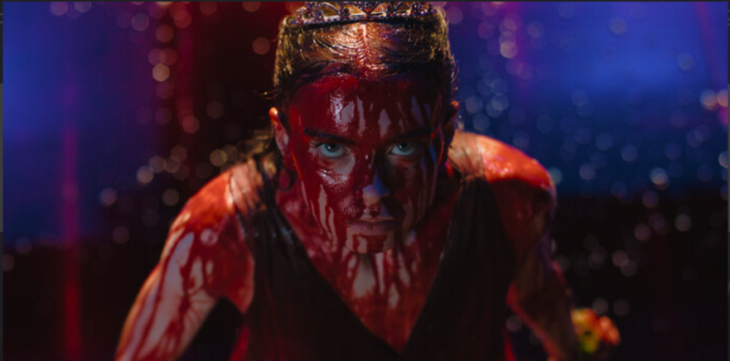
Mike Flanagan’s ‘Carrie’ shines as a bold, modern reinvention of Stephen King’s classic
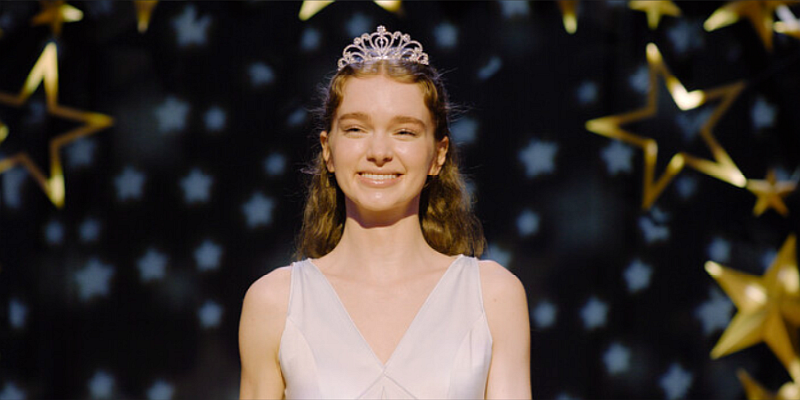
More than 50 years after Stephen King introduced readers to Carrie White, and five decades after Sissy Spacek made the character an icon of horror cinema, Mike Flanagan has found a compelling new way to tell her story.
Premiering all eight episodes on Prime Video October 7, 2026, Carrie is neither a simple remake of Brian De Palma’s celebrated 1976 film nor a slavish reproduction of King’s 1974 debut novel. Instead, Flanagan uses the longer television format to take the familiar story apart, expand its characters and rebuild it for an era of smartphones, social media, school-shooter drills and online humiliation.
And according to reviews from Slate, Variety and Yahoo! Entertainment, the gamble largely pays off.
Slate called the series the best adaptation of King’s novel since De Palma’s original, praising Flanagan for remaining faithful to the essential story while significantly expanding it. Variety similarly described the series as a captivating and brilliant reimagining, while Yahoo! Entertainment gave it four out of five stars, calling it a thoughtful and emotional reinvention.
~
A familiar Carrie—but not the same Carrie: At the center is Summer H. Howell, who takes on the difficult task of playing a character forever associated with Spacek.
Rather than attempting to imitate the 1976 performance, Howell creates a distinctly different Carrie: shy, innocent, curious and surprisingly optimistic about the possibility of finally experiencing life beyond her isolated home. That distinction is important.
King’s Carrie was an awkward, tormented teenager whose classmates and domineering mother helped push her toward catastrophe. Flanagan’s Carrie retains that fundamental tragedy but is given considerably more emotional and psychological space.
Her sheltered existence becomes especially poignant after the death of her father. Suddenly exposed to the outside world, Carrie enters high school with little understanding of the social rules, dangers and cruelty waiting for her.
Her innocence makes what follows even more disturbing.
Social media becomes the new locker-room cruelty: One of Flanagan’s most effective changes is moving the story firmly into the present. The bullying that once occurred primarily in school hallways can now follow a teenager home through a phone screen. In this version, Christine Hargensen, played by Alison Thornton, operates a gossip-oriented Instagram account called “Carrie Red,” turning humiliation into a public spectacle.
That change gives one of King’s central themes—cruelty—a particularly contemporary edge.
A cruel comment can now be photographed, posted, shared and replayed indefinitely. For Carrie, who is already struggling to understand the world around her, the internet becomes another weapon wielded against her. The series also introduces contemporary school realities, including active-shooter drills, adding another layer of anxiety to Carrie’s already frightening transition into adolescence.
Samantha Sloyan nearly steals the show: If Howell provides the emotional center, Samantha Sloyan delivers one of the series’ standout performances as Margaret White. Margaret remains deeply religious, controlling and fearful, but Flanagan gives her more dimension than the traditionally terrifying figure portrayed by Piper Laurie in De Palma’s film. Her behavior is still disturbing, but the new series spends more time examining the complicated relationship between mother and daughter—and the possibility that Margaret’s repression and paranoia are intertwined with a twisted desire to protect Carrie.
Slate particularly praised Sloyan’s performance, suggesting that she comes remarkably close to making audiences forget Laurie’s iconic interpretation. That is no small accomplishment.
Sue and Christine become more complicated: The expanded running time also allows Flanagan to flesh out characters who previously occupied more recognizable roles in the story.
Siena Agudong’s Sue Snell is presented as considerably more conflicted. She can associate with a cruel bully while simultaneously possessing a genuine desire to do what is right.
Thornton’s Christine likewise receives additional history and motivation. She remains cruel, but the series makes her more complicated than the almost purely malicious antagonist found in earlier versions. That additional characterization is one of the principal advantages of Flanagan’s television approach.
More than horror: Perhaps the most interesting aspect of the new Carrie is that it isn’t primarily interested in frightening viewers. It is interested in why people hurt one another—and what happens when someone who has been repeatedly victimized finally discovers she possesses extraordinary power.
Flanagan also brings a distinctly feminist perspective to the material, connecting Carrie with a broader history of women possessing unusual abilities and subsequently being feared, demonized or dismissed.
Variety described the series as a story about young women reclaiming agency, while Yahoo! Entertainment emphasized the show’s interest in bullying, isolation, family, religion and the lasting effects of cruelty. The result is closer to a character drama with horror elements than a conventional horror series.
~
But eight episodes may be too much: The biggest criticism shared by the reviews is also fairly straightforward: there may simply not be enough story in King’s relatively compact novel to comfortably fill eight episodes. Slate noted that portions of the middle episodes sometimes feel as though they are spinning their wheels. Yahoo! Entertainment similarly found that some of the expanded mythology can distract from the central Carrie story.
That is the danger of turning a relatively contained tragedy into an open-ended television universe. King’s original story has tremendous power precisely because it builds toward an inevitable catastrophe. By expanding the mythology—and introducing other characters with supernatural abilities—Flanagan risks making the story feel larger but somewhat less focused.
The ending also leaves the possibility of additional seasons. Flanagan has reportedly expressed interest in continuing the story beyond the first season, potentially turning Carrie into a three-season narrative. Whether that proves to be inspired or unnecessary may ultimately depend on what he does with the material once he moves beyond King’s original novel.
~
The verdict: A surprisingly fresh ‘Carrie’: There have been numerous attempts to revisit Carrie since De Palma’s landmark film, including the 1999 sequel The Rage: Carrie 2, a 2002 television adaptation and Kimberly Peirce’s 2013 theatrical remake.
None has displaced De Palma’s film in the cultural imagination. Flanagan may not accomplish that either—and perhaps he shouldn’t try. Instead, his Carrie succeeds by recognizing that audiences already know the basic story. The challenge is finding something new within it.
He does that by transforming Carrie from a familiar horror archetype into a more fully realized young woman discovering friendship, sexuality, technology, cruelty and, ultimately, her own extraordinary abilities. Howell’s performance, Sloyan’s complex Margaret, the contemporary setting and Flanagan’s willingness to expand King’s mythology make the series considerably more than another trip to the prom.
For Stephen King fans, Flanagan devotees and viewers who thought they already knew Carrie White’s story, this new version offers a persuasive reason to look again.
Overall Review: ★★★★☆ — 4/5
An ambitious, emotionally rich and frequently unsettling reinvention that successfully modernizes King’s classic. Its eight-episode length and expanded mythology occasionally dilute the original’s impact, but the performances and fresh perspective make this one of the year’s more compelling television adaptations.
Streaming: Carrie is now available on Prime Video, with all eight first-season episodes premiering October 7, 2026.
Video:
~
(Sources: Slate Weekly, Variety, Yahoo! Entertainment, Time)
Posted by Richard Webster, Ace News Today
Follow Richard on Facebook, Twitter & Instagram